Not Every Film Should Be Screened… and Not Every Screening Justified
Not Every Film Should Be Screened… and Not Every Screening Justified
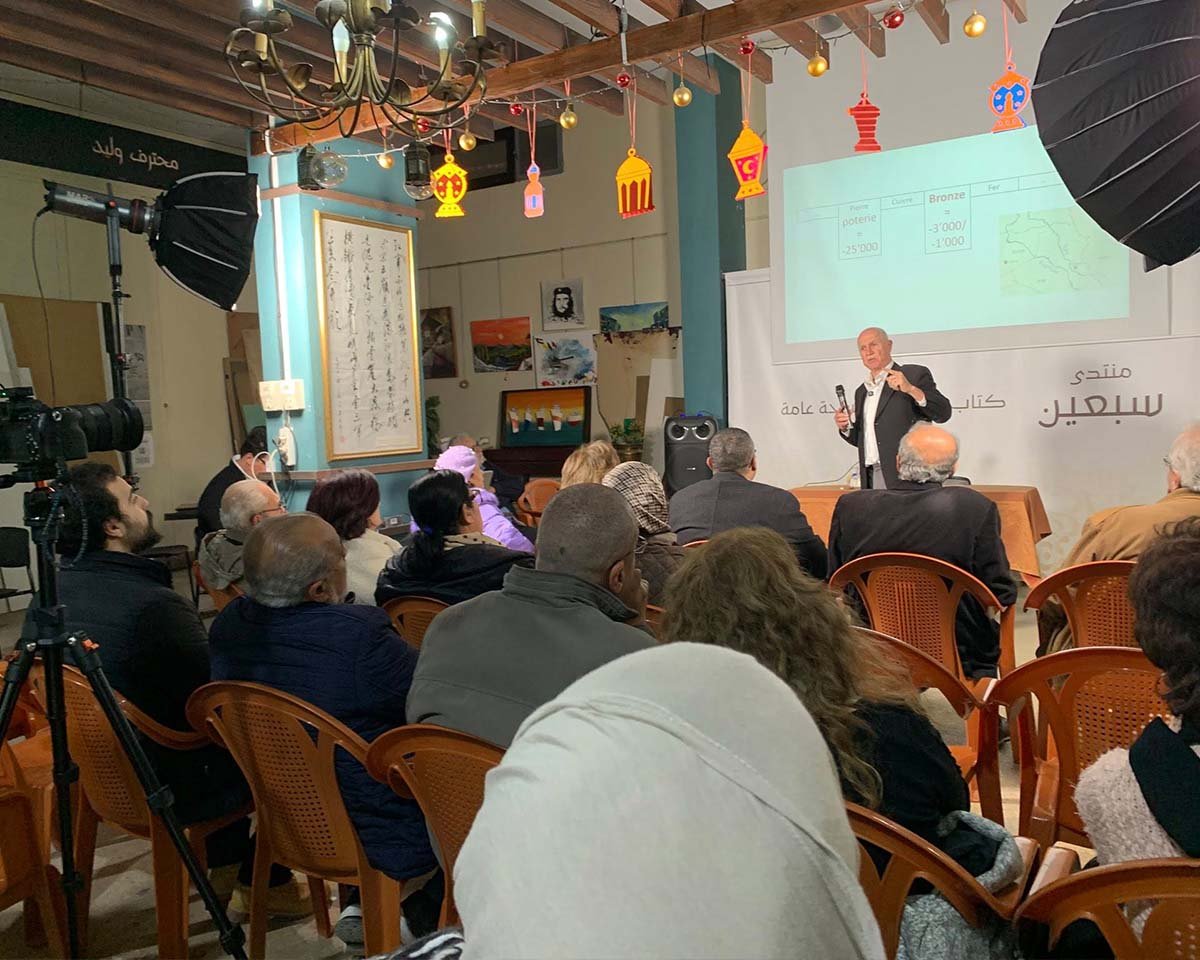
Last night in Sidon, we did not gather simply to watch a film.
We gathered to test our taste, our patience — and perhaps even our convictions about what it means to have a “Cinema Club” in a city like this.
Around thirty-five people sat in the room. Some came out of curiosity, others out of passion, and some still carried the emotional resonance of the previous screening of Cinema Paradiso — that film which reminds us why we love cinema in the first place.
But what happened after My Last Valentine in Beirut ended felt heavier than the film itself.
The 2012 film by director Salim El Turk is not easy, not warm, and not concerned with winning your affection. It follows “Juliet,” a woman working in prostitution in Beirut, whose life intersects with the making of a film about her. The narrative is fragmented and non-linear, full of jumps and experimentation. It feels closer to a visual confession or an internal diary than to a story being told. It does not hold your hand, nor does it seem troubled if you lose your way.
And this is where the rupture began.
The division was not only about understanding the film — or failing to — but about what followed. After the screening, a lengthy technical explanation was presented: cinematography, directing choices, editing techniques, camera angles, aesthetic intentions. It was undoubtedly rich in knowledge. Many learned new details about filmmaking they had never encountered before. There was genuine educational value.
But the question that lingered in the air was more delicate:
Was this explanation illumination… or justification?
Do we need a confusing film in order to learn about editing?
Couldn’t the same technical discussion have emerged from a film that offered depth alongside clear viewing pleasure?
Many did not hide their boredom. Some said it openly: the narrative was disjointed, the pacing exhausting, and invoking “auteur cinema” was not enough to transform confusion into virtue. Others, however, saw experimentation itself as a courage worthy of respect.
Yet the matter runs deeper than differing tastes.
In a city like Sidon, where culture is not a luxury but a responsibility, choosing a non-mainstream film carries meaning. Since its founding, Sabeen Forum has declared its intention to create a different kind of environment. The question, then, is not whether the film was good or bad. The question is: what do we want from a Cinema Club?
Is it enough for a film to spark debate in order to be considered successful?
Is “art for art’s sake” an acceptable cultural stance in a city longing for shared spaces?
Or should the club strive to balance challenge with enjoyment, experimentation with the ability to connect?
Opening such a discussion is not simple. When people who rarely speak begin to speak, when objections rise here and defenses there — that in itself is a sign of life. But we must also be honest: provocation alone is not enough. Debate is not always proof of value. Sometimes it is merely the result of a work that failed to hold its audience.
Perhaps the film was not bad.
Perhaps it was not great.
But it placed before us an uncomfortable mirror:
Do we want a Cinema Club that satisfies us?
Or one that tests us?
And can it do both?
Last night did not offer answers. But it revealed something more important: the role of culture is neither to reassure us nor to provoke us without purpose, but to compel us to rethink our choices — as an audience, as a forum, and as a city.
When the lights came on, the question was no longer about Juliet.
It was about us.